Maximizing the Value of Your Solar System

Maximizing the Value of Your Solar System

Congratulations on deciding to purchase a solar system. It is a great long-term investment for your home, and with the right habits, you can maximize both the financial return and the daily benefits of your home power plant.

How Solar Power Works

A solar system begins producing power once the morning sunlight is strong enough. Production gradually increases through the morning, usually peaks around midday, and then tapers off into the evening.

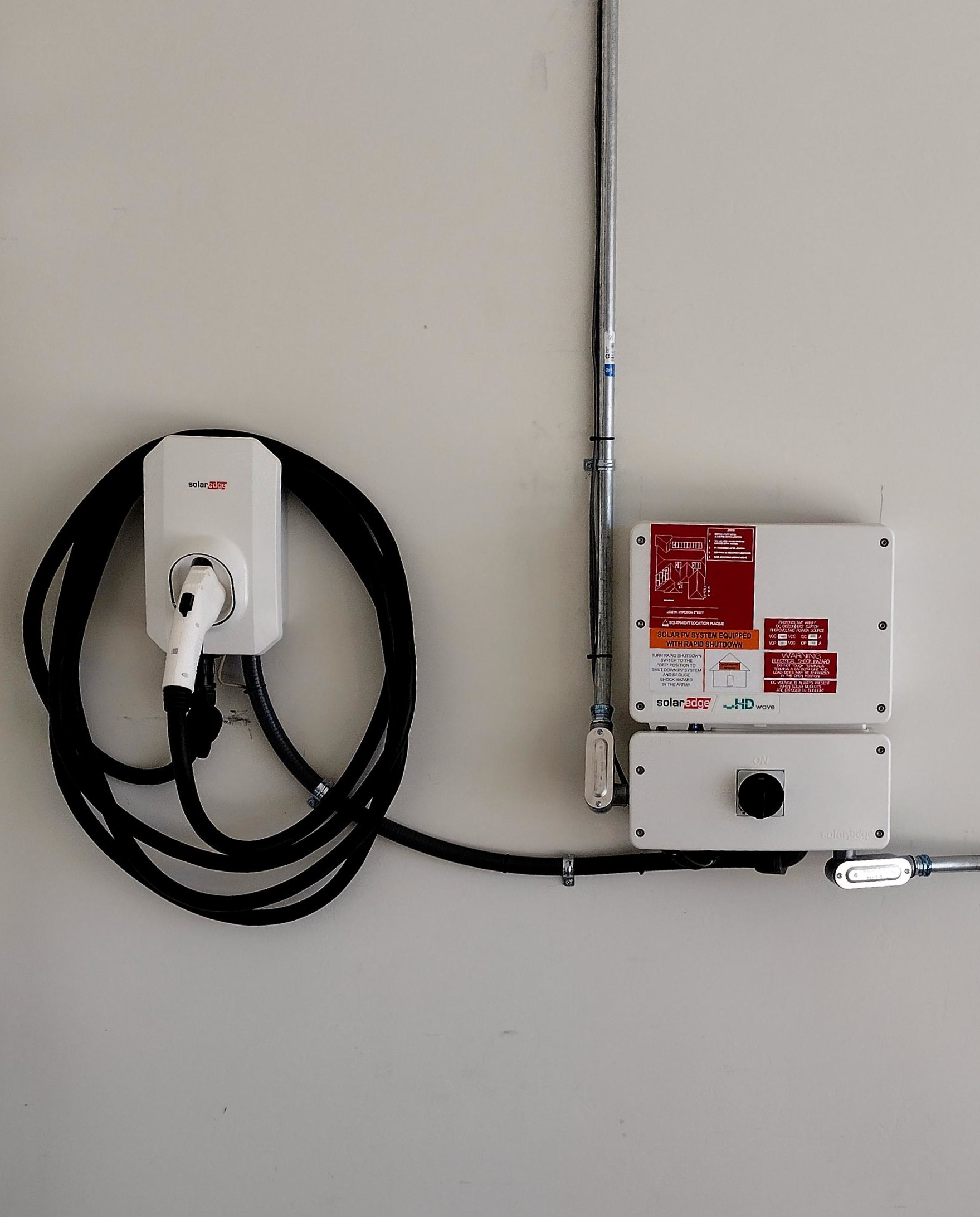
Solar panels produce direct current, or DC power, which travels from the roof to the inverter. The inverter has three important jobs:

  1. Convert DC power into usable alternating current, or AC power, for the home.
  2. Manage the solar panel output so the system can harvest as much available energy as possible.
  3. Provide data that shows solar production, home consumption, and interaction with the utility grid.

Where the Power Goes

Once solar power is produced on site, it generally does one of two things:

  • It is consumed immediately by the home.If an appliance is running while solar power is being produced, that appliance can use the solar energy directly. If the home has battery storage, some of that power can also be stored and used later.
  • It is exported to the utility.If the home’s demand is already met and the batteries are full, the extra power is exported to the utility in exchange for an excess-generation credit, often called an export rate.

The key point is that power used inside the home is usually worth more than power exported to the utility. When solar power offsets electricity you would otherwise buy from the utility, it saves you at the retail rate. Exported power is typically credited at a lower rate.

Understanding Utility Rates

Utilities generally do not credit excess solar generation at the same rate they charge for delivered electricity. Many utility plans are tiered, seasonal, or based on time of use, meaning the cost of electricity changes depending on how much you use, the season, and the time of day.

For customers on time-of-use plans, the most important strategy is to reduce grid usage during expensive peak periods and shift flexible energy use into the solar production window.

Tucson Electric Power Example

With Tucson Electric Power, the highest summer rates are typically Monday through Friday from 3:00 p.m. to 7:00 p.m. These are “on-peak” hours. Off-peak hours include weekends, major holidays, and times outside the 3:00 p.m. to 7:00 p.m. window.

Although off-peak electricity is cheaper than on-peak electricity, it is still usually more expensive than the credit received for exported solar power. That is why increasing self-consumption is so important.

Use Data to Improve Your Results

To improve your solar outcome, start by understanding when your home uses power and what can be shifted, reduced, or automated.

Before Solar: Interval Data

Before installing solar, your utility website may allow you to download interval data. This data shows your electricity use in 15-minute intervals over the course of a year. It provides a baseline for how your home has historically used power.

With advanced modeling software, historical usage can be compared with expected solar production to estimate how much energy will be used directly by the home, how much may be stored in a battery, and how much may be exported to the utility.

After Solar: Monitoring App and Utility Bill

After installation, your solar monitoring app becomes the first tool for improving performance. Most systems show panel-level production, total solar output, home consumption, and how the home interacts with the grid.

You can usually view this information in real time or historically by day, week, month, or year. The utility bill then becomes the second tool: it confirms whether the changes you make are improving your results.

Start with Small Changes

Small changes can add up, especially when they do not disrupt daily life. The goal is to increase self-consumption: using more of your solar power on site instead of exporting it at a lower value.

Improve the Home’s Thermal Envelope

An efficient home performs better than a leaky one. Start by sealing and insulating the home so the HVAC system does not have to work harder than necessary.

  • Check insulation, roof coatings, and air leaks around windows, doors, vents, and pipe penetrations.
  • Seal drafts with caulking, spray foam, or weatherstripping where appropriate.
  • Use blackout curtains, window tint, shade structures, trellises, vines, or trees to reduce direct heat gain.

Reduce Heat and Improve Appliance Efficiency

In southern Arizona, reducing heat inside and around the home can make a noticeable difference. Incandescent and halogen lighting, leaky dryer vents, dirty coils, clogged filters, and electronics that run hot can all add load to the home.

  • Replace high-heat lighting with efficient alternatives.
  • Clean refrigerator coils and vents on appliances, computers, gaming systems, and other equipment that moves air or transfers heat.
  • Keep HVAC filters clean and free-flowing. For energy-saving purposes, a lower MERV filtration rating may improve airflow and efficiency where appropriate.

Manage Base Loads and Phantom Loads

Base loads are devices that are always on, such as refrigerators, cable modems, fish tank filters, air purifiers, smart appliances, and other electronics that rarely shut off. Review each one and ask whether it truly needs to run 24/7 or whether it can be scheduled with a timer.

Example: Outdoor Fountain

An outdoor fountain may have a small pump and lights that run continuously or operate from dusk to dawn. If you are rarely outside after midnight, a timer can reduce unnecessary runtime without affecting your daily experience.

Example: Fish Tank

A fish tank with filters, an air stone pump, and multiple lights does not always need every component running all day. For example, the air stone and ambient LED lights may run continuously, while filters run from 8:00 a.m. to 5:00 p.m. and additional lights run from 9:00 a.m. to 3:00 p.m. and again from 7:00 p.m. to midnight.

This schedule moves the larger power consumers into the solar production window and keeps lighting outside the most expensive peak hours.

Use Smart Thermostats Strategically

Air conditioning is one of the largest electricity users in the home. Many people assume the only way to save is to raise the thermostat, but a smarter strategy is to shift cooling into the solar production window and reduce runtime during peak-rate hours.

Smart thermostats can help by offering automated scheduling, geofencing, occupancy sensing, energy insights, and weather-aware adjustments.

Pre-Cooling Example

Assume the thermostat is normally set to 77 degrees during the summer. Peak pricing runs from 3:00 p.m. to 7:00 p.m., while most solar production occurs between about 9:00 a.m. and 3:00 p.m. In southern Arizona, strong production may extend an hour or two beyond that window.

To reduce peak-hour AC usage, begin pre-cooling before on-peak rates start. For example:

  • At about 2:30 p.m., lower the thermostat from 77 degrees to 74 degrees.
  • For a short interval around 2:45 p.m., lower it again to 72 degrees, then return it to 74 degrees.
  • Hold 74 degrees until 4:00 p.m., then gradually step back up: 75 degrees at 4:00, 76 at 4:30, 77 at 5:00, 78 at 6:00, 79 at 6:30, and back to 77 at 7:00.

This approach shifts more cooling into the period when solar output is strongest and reduces runtime during the most expensive hours. Adjust the schedule more or less aggressively based on comfort, home performance, and utility rates.

Use Batteries as a Complement, Not a Replacement

Batteries are common in modern solar systems and are often charged by mid-afternoon, making them useful for avoiding peak power purchases. However, a battery does not replace good energy-management habits. The benefits compound when battery storage is combined with smart scheduling and improved self-consumption.

Schedule EV Charging Wisely

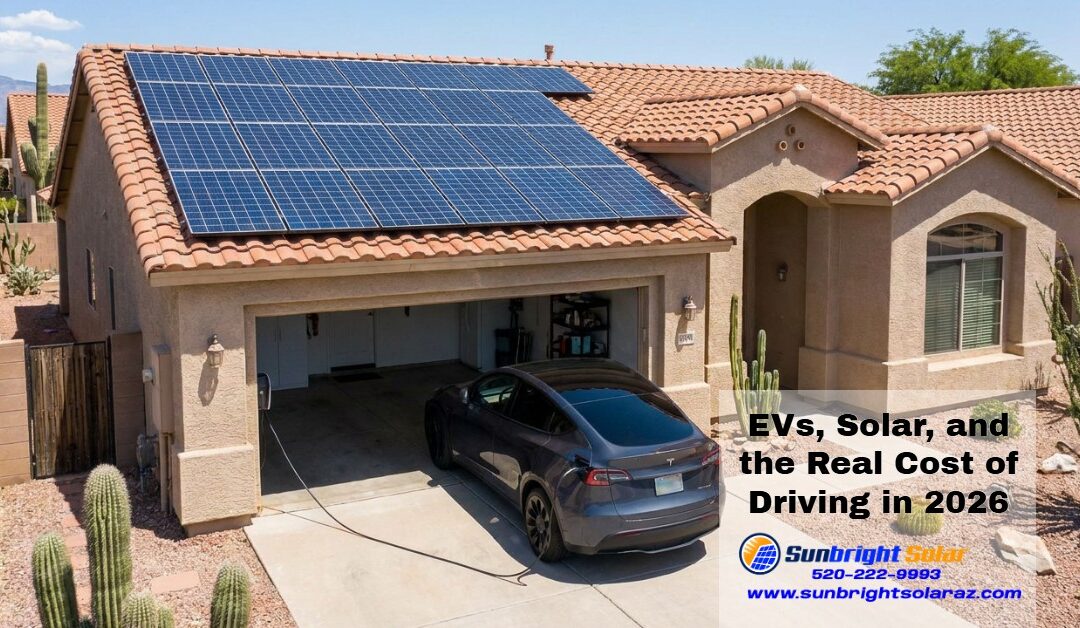
If you drive an electric vehicle, the best time to charge is often in the morning, about one or two hours after sunrise. By then, solar production may be high enough to meet the home’s needs and begin charging the vehicle before any battery storage is full.

If possible, lower the charging rate so that charging is spread over more of the solar window. Daily life will not always allow perfect timing, and that is okay. The main priority is to avoid charging during on-peak hours from 3:00 p.m. to 7:00 p.m. when possible.

A simple way to think about the day is this: morning shoulder excess can support EV charging, midday excess can support flexible household loads and battery charging, and afternoon excess can help carry the HVAC load.

Shift Flexible Loads to Midday

Flexible or elective power use should be scheduled during the day whenever practical, especially during strong solar production and outside on-peak hours.

  • Pool and spa filtration: Run filtration during the day and avoid 3:00 p.m. to 7:00 p.m., especially the later part of that window when solar production is lower.
  • Laundry, dishwashing, vacuuming, and similar tasks: Schedule these during solar production hours when possible.
  • Electric water heaters: If the unit has a programmable thermostat or can be retrofitted with a smart controller, schedule heating in a way that supports solar self-consumption and avoids peak rates.

Build Better Long-Term Habits

To get the most from solar over time, choose efficient appliances, look for available rebates, develop good energy habits, and regularly review your solar monitoring app and utility bill. The best results come from steady, practical adjustments that increase self-consumption without making daily life harder.

Give Sunbright Solar a Call Today!

520-222-9993

Sunbright Solar Company Growth and Hiring Report

Sunbright Solar Company Growth and Hiring Report

TUCSON, AZ — Sunbright Solar LLC.,  the top-rated Souther Arizona solar installer is rounding out its fifth year in business with continued  growth and hiring. Among other developments, we have 


With consistent growth prior and even through 2020’s tryting conditions, we are focused on stable growth and supporting our employees with training and advancement opportunities.


We are presently hiring. Please apply via our Indeed page, here

We adhere to higher standards of construction and conduct 100% of our solar installations with our in-house crews. 


Please 

Sunbright Solar Named Elite Solar Installer by Partner Panasonic North America

Sunbright Solar Named Elite Solar Installer by Partner Panasonic North America

TUCSON, A.Z., January 14th, 2:30 pm AZT

Top-rated solar installer Sunbright Solar LLC is proud to announce we have been added to the Elite Tier in Panasonic North America’s Residential Solar Installer Program, the highest distinction available. Sunbright Solar has previously been recognized both formally and informally by Panasonic as the premier solar and battery installer in Southern Arizona, and we’re grateful that our company can pass on substantial savings and benefits to our customers as a result of this partnership.

This is just the first of our major news announcements in 2021, so stay tuned to Sunbright Solar’s blog or social media channels for even more big news this year!

NEWARK, N.J., Jan. 14, 2021 /PRNewswire/ — Panasonic Corporation of North America today announced 13 installers across the country have been promoted to the Elite and Premium tiers of its Residential Solar Installer Program. Not only will installers and homeowners gain access to the Panasonic Solar Modules portfolio, they will also receive access to the new high-efficiency Panasonic Solar EverVolt Modules, available beginning in February.

Homeowners in Arizona, Texas, Florida, Iowa and Indiana will be able to access Panasonic’s solar products and expertise from seven Elite Level installers, who will be the first in Panasonic’s network to gain access to new products and rebates, while enjoying preferred access to product availability and the best pricing:

  • AC/DC Solar in Brandon, Fla.
  • Advance Solar and Energy in Fort Lauderdale, Fla.
  • Energy Consultants Group in Anamosa, Iowa
  • Jefferson Electric, LLC in Indianapolis, Ind.
  • Wayne’s Solar in Ormond Beach, Fla.
  • Wells Solar in Austin, Texas
  • Sunbright Solar LLC, Tucson, Ariz.

Six additional installers in Florida, Texas and New Mexico will also offer homeowners Panasonic’s benefits as new Premium Level installers, with exclusive access to qualified sales leads, a library of cooperative marketing assets, training programs and a robust Installer Portal:

  • 512 Solar in Austin, Texas
  • Greenbelt Solar in Austin, Texas
  • IES Texas Solar in San Antonio, Texas
  • Organ Mountain Solar & Electric in Las Cruces, N.M.
  • Solar SME Inc. in Dallas, Texas
  • Bob Heinmiller Solar Solution in Orlando, Fla.

“It’s more important now than ever to have a strong presence in the fastest-growing solar markets in the U.S. In fact, Florida and Texas are the second and third hottest markets in solar growth in the country, behind only California. Compounded with homeowners’ urgency to take advantage of tax credits, more expert installers are needed to keep up with the demand,” said Mukesh Sethi, Director, Solar and Energy Storage, Panasonic Life Solutions Company of America, a division of Panasonic Corporation of North America. “Panasonic is thrilled to welcome 13 new certified installers to our Elite and Premium Installer tiers to serve homeowners in Florida, Arizona, Texas, Iowa, Indiana and New Mexico.”

Introduced in 2016, the Panasonic Solar Residential Installer Program provides exclusive benefits and business opportunities to tiers of installers who meet certain qualifications, including Panasonic’s high standard of excellence. In addition to business-supporting perks, members of these exclusive tiers are able to pass on to consumers the benefits they receive, such as special pricing and preferred access to in-demand and new products. For more information for installers, visit: na.panasonic.com/us/solar/installer.

About Panasonic Corporation of North America
Newark, NJ-based Panasonic Corporation of North America is committed to creating a better life and a better world by enabling its business-to-business customers through innovations in Sustainable Energy, Immersive Entertainment, Integrated Supply Chains and Mobility Solutions. The company is the principal North American subsidiary of Osaka, Japan-based Panasonic Corporation. One of Interbrand’s Top 100 Best Global Brands of 2019, Panasonic is a leading technology partner and integrator to businesses, government agencies and consumers across the region. Learn more about Panasonic’s ideas and innovations at www.na.panasonic.com/us.

SOURCE Panasonic Corporation of North America

Can I Get Solar in My Neighborhood? TEP’s New Guidelines (Updated 2021)

Can I Get Solar in My Neighborhood? TEP’s New Guidelines (Updated 2021)

As of January 2021, TEP is again allowing the large majority of neighborhoods to have grid-tied solar panel systems on homes and businesses.

File this under good news: As of mid-January 2021, Tucson Electric Power is no longer requiring home and business owners in numerous Southern Arizona neighborhoods to add an expensive battery system in order to go solar. Batteries add signifcant cost to a system, directly reducing the savings payback from going solar for the individual or business. See Sunbright Solar’s original announcement here:  https://www.facebook.com/sunbrightsolaraz/posts/1546804748862405 

One neighborhood, near I-10 and West Marana Road, is still subject to limits. See the West Marana Road link below to determine if you are impacted. Sunbright Solar will work with you to get through the approval process, so please contact us if you need assistance with a solar install there.  We’re your neighbors and we’re here to help. Just one benefit of Sunbright Solar being a local Tucson solar company!

See below for the original update on TEP’s saturations zones and further resources:

“Some Areas Will Need Home Battery for TEP’s Approval

Arizona consistently leads as one of the top areas in the U.S for solar panel installation, since home, business, and organizations can all benefit from significant savings when they go solar. However, some neighborhoods serviced by Tucson Electric Power both in and outside of Tucson are now being limited due to heavy solar saturation on the local grid circuit.

For neighborhoods in these Saturation Zones, TEP has stated it will only approve systems that also include a battery. 

Am I affected? Here are the impacted neighborhoods (click to view map):

Aviation and Kino

El Con – Reid Park

I-10 and Twin Peaks Road

I-10 and West Marana Road

I-10 and Valencia Road

Ina and Thornydale

Irvington and Houghton

La Cholla and Naranja

Northwest Vail

Rancho Sahuarita

UA Tech Park 

So, what does it mean if my neighborhood is on TEP’s Saturation Maps?

For consumers whose primary goal is saving money, it can certainly impact their bottom line cost of a solar panel system and the overall positive returns from their investment.  Solar power systems are usually still connected to the electrical grid system to help manage daytime and nighttime usage needs, even when the sun isn’t shining.

The alternative is a system with a home battery (also known as Solar + Storage).  Home batteries are entering more widespread use in Southern Arizona, but they add cost to a system. Our professional recommendation is to get proposals that consider battery options, and see if it pays off for you.

Sunbright Solar Sidenote: Sunbright Solar can give you an honest appraisal of your benefits and savings from going solar. Contact us for friendly, knowledgable assistance looking at all your options, so you can make an informed decision. In a booming industry like solar, it’s good to know you have a local contractor you can trust for quotes or second opinions. Call Sunbright Solar for help today— 520-222-9993

And we also reccommend you stay alert on the news! TEP is so far the only utility in Arizona who has been rejecting solar applications. According to other large electric companies in Arizona, they have not been rejecting applications under the new rules, and it remains to be seen if TEP’s interpretation of the rules will be impacted by public

You can also follow us on Facebook to make sure you don’t miss any big updates! Like Sunbright Solar’s Facebook Page here!

Could this impact me in the future?

It’s hard to say for sure, but it’s likely good advice to be aware of how saturated your area is if you’re considering solar. For the sake of getting an understanding of which areas in Southern Arizona are seeing the most solar saturation, we broke down the list into broad geographic areas.

We found that the Northwest region (Marana, Northwest Tucson, & Tortolita) had the highest concentration, followed by Southeast Tucson and Midtown Tucson areas.

Three (3) in Southeast Tucson, Two (2) in Midtown Tucson, two (2) in Marana, one (1) in Northwest Tucson, one (1) in Tortolita, Northwest of Tucson, one (1) in Sahuarita, and one (1) in Vail.”

Resources:

https://sunbrightsolaraz.com/solar-battery-storage/

TEP Solar Guidelines

New state rules limit rooftop solar systems in some Tucson neighborhoods


We Get Asked This A Lot On Solar

We Get Asked This A Lot On Solar

At Sunbright Solar, we love it when someone get straight to the point, and we do sometimes get the question “But seriously, is solar worth it?” given to us point blank. And the straight-up answer is “Yes! For many, solar is extremely smart financially, and pays off.”

That’s why we’re always getting stopped in public by solar owners exclaiming “I LOVE my solar!” Seriously if you hang around the Sunbright booth at events, dozens of people will usually drop by, saying the same (We love this, by the way!)

Large purchases should of course be approached with seriousness. There are some boxes you should check as well, like is your roof in good condition?  (Hey, why not ask Sunbright?)

So just to give you a real idea of the true payoff and value, we’re sharing a direct response we gave recently to a customer in response to those questions.

If you want to connect and talk with local, honest experts as well, please give us a call, and we’ll be happy to help!  520-222-9993

“Hi John,

Understood […] and to your note about “Still looks like 8-10 years to ROI (return on investment)”

Eight to ten years, that depends on what you get, what you pay, how you pay, and how you figure the ROI. 

What you get: 

I showed Panasonic panels with a SolarEdge Inverter, both with extended warranties and consumption metering, and this is with dealer financing included.  This has a cost associated.

Drop consumption metering, and go with the 12 year-warranty vs 25 on the inverter, and we save several hundred dollars while keeping the same KWH performance. And/or change the Panasonic panels out for a “standard panel” or for even less.

These panels do not have the same kwh performance, warranty, etc., and they degrade at nearly double what Panasonic does… but the cost can make up for it, and degradation catches up with you on the back half, not the first 15 years.

What you pay, how you pay:

Once the equipment is dialed in, that sorts out what you pay. The other side of that is how. 

Our cost and projections are listed assuming you use our dealer financing. This has a cost associated with it. About +/- 7%. Use your own financing or pay cash, and the cost goes down along with the ROI in years and rate of return % (RoR) goes up. 

If you finance your system as many people do “because it’s still better than the alternative,” then how you decide to proceed will affect the ROI as well.

Our shorter terms have lower rates and a better total cost of ownership because you pay less interest while our long-term loans offer great day 1 savings. Some people buy solar on a cash flow basis: They know they have to pay for power one way or another so they take their $200+ $2,500 expense and switch to a 20-year solar payment of $140. That’s an $850+ a year raise.

Bottom line is, these options have an impact on the ROI on how quickly it pays for itself.

How you do the math for the ROI:

Before I get into it- What is the ROI on the alternative? You would say “It’s the Monthly utility bill” And you’d be correct… And these costs are inflationary, meaning they go up reliably.

More importantly: statistically speaking, Arizona and the Southwest they are increasing at a higher rate than standard inflation. And of course, statistically we are using more power per person due to high heat summers.

This brings me to my first point. The value of solar production “kwh” depends on how it’s used. Two things matter here: #1, Avoided costs and #2, Utility buy back rates (export rates). If the export rate is locked in for 10 years and then the utility raises rates (something non-solar customers are at the mercy of) then the avoided costs value (saving or returns) go up. If this is modeled in the ROI, then it gets better.

Alternative ROI’s Available

I’m an investor, landlord, business partner, and average middle-aged American with various financial accounts and a relationship with both a credit union and banks. I try to be more financially savvy as I age. 

So, I ask the normal questions on what can I invest in, what level of risk, and of course what are the returns? 

Generally, we have several options, and then the tax consideration. Savings and money market accounts are “low risk, low reward.” CD’s and bonds, followed by mutual funds, ETFs, & stocks… “Better returns, higher risk.” And yes, there is bitcoin, crowdfunding, etc., other uncertain markets.

And then we have solar power. It’s high single-digit/ low double-digit returns with a relatively low level of risk. Pair that with the fact that the alternative is in an inflationary utility bill and for an investment it’s actually pretty good. 

But there’s definitely more than that. For one, you own a house. And as a homeowner, you do periodic improvements. Each with a cost and effect on home value. This is important because statistically we all sell our home. Some more than others.Everything from new paint and flooring, to a new roof, kitchen, bathroom, pool or addition has a cost and home value effect.  Furthermore, there is a marketability aspect. Is the home improvement that you have done in demand? Homes with certain features statistically spend less time on the market and that of course affects the final price.

Now Sunbright Solar does not assign a dollar value on this, but Zillow in 2019 found a 4.1% average increase in total home value. And Berkeley did a study that analyzed 22,000 home sales with about 1 in 5 having solar across multiple states over about 5 years and found that homes with solar sold for and average over $15,000 more than comparable homes, and again government funded NREL National Renewable Energy Laboratory found that homes with solar sold on average 20% faster with a premium of roughly 17%.

Here’s another piece to consider: How the seller does the selling. If no information on the solar is on the listing, then the value potential buyers will pay is certainly diminished.

On the other hand, if the solar is shown in the listing and a “solar” utility bill is on the table, along with a 1-page infosheet showing the warranties are transferable… Well, your home value just went up. 

Final point to all of this. If we even consider a fraction of an increase in the home value and marketability in the ROI math then the payback period is dramatically reduced.

Last point: Why can be more important than ROI! I don’t know who or what type of person you are and what you think about solar, politics, and life in general. Honestly, it’s not why I’m here. But personally, when I sit down without any distractions and think about what I unbiasedly feel on things like sustainability, efficiency, and even climate change, or personal legacy, or finances … When I do I think about things I value, and then naturally gravitate back to things like solar, efficiency, and sustainability. 

Personally, I didn’t need a or set out with a preconceived ROI. I just needed a way to make it work. Part of my ROI is my motivation, part is the cool consumption/production monitoring app, and part of it is that it’s one of the best financial ROI’s I know of. Although ultimately, I think the ROI is mostly the perspective. What do you choose to value?

Okay, that was more than I anticipated typing. I would usually type something like this up and use my better judgement and have one of the office staff fix all my grammar and long-windedness… But NOT TODAY Richard! I’m happy to help and here if you want to continue to explore it. Just let me know!

Thanks,

Dan  

The Best Time To Plant  A Tree Was 20 Years Ago. The Second Best Time Is Now.” 

April 2020

Keeping Arizona Healthy & Safe from COVID-19

Keeping Arizona Healthy & Safe from COVID-19


During this time of uncertainty, Sunbright Solar is taking proactive measures to continue serving Southern Arizona with excellence. Solar power keeps us healthy by improving the air quality here in Southern Arizona, as well as proving life-sustaining electricity and greater grid resilience in the face of natural disasters and global events.

We know first-hand how essential clean energy is to the health of Southern Arizona, so whether you’re a customer, partner, or considering going solar with Sunbright, we’re here working hard for you.  In the past weeks, Sunbright Solar made the rapid transition to support the health and economic strength of our community in the face of the novel coronavirus (COVID-19).

As always, we’re committed to bringing you clean renewable energy that gets you the most savings and benefits, and we’ve taken this opportunity to enact and ramp-up existing processes to support and protect our Sunbright Solar friends and family. Here’s what we’re doing for you:

Health is Priority #1

Sunbright Solar protect you with comprehensive safety, disinfection, and attendance policies. These include: Sunbright Solar is in strict compliance with all CDC Guidelines, including 100% adherence to CDC attendance policies with regards to sick employees. Our crews are proud to be staying safe and working hard.

Strict travel, face-mask, and social distance protocols. Sunbright Solar crews are in constant communication with the Project Manager, so there is no need to interact with crews at any point during preliminary or installation steps. Crews employ masks and have daily plans that eliminate all extraneous points-of-contact and minimize risk.

Disinfection and handsanitizing protocols. Sunbright Solar has implemented 100% complete disinfection processes completed numerous times daily. The comprehensive process includes all surfaces, tools, equipment, and transportation, as well as having all hand-sanitization needs fully covered.
Condensed, Remote, and Work-from-Home Solutions

Sunbright Solar has moved to condensed work weeks and work-from-home schedules to minimize any risk. We also continue to provide remote solar consultations and DocuSign options.

If you are considering solar, we have you covered with easy remote Consultations

Investing in your future is a smart strategy now, and we make it easy to get informed on the financial benefits. Contact us to learn about $0-Down and Day-1 savings options.

Stay connected with Sunbright Solar

Stay connected and informed with your Sunbright Advocator App. You can access your SolarEdge monitoring and direct messaging, as well as make referrals and set up to receive your referral rewards via direct deposit or gift card.

Our thoughts continue to be with all those adversely affected by COVID-19, and we’ll continue with the same dedication to value and service as we always have. We’ll keep you updated with any changes as we face this challenge together. Questions? Call 520-222-9993 for local assistance.


Additional Resources:

Centers for Disease Control (CDC) Resource Center

World Health Organization (WHO) Resource Center

State of Arizona COVID-19 Resource Center

Pima County Resource Center

Pinal County Resource Center

Maricopa County Resource Center