
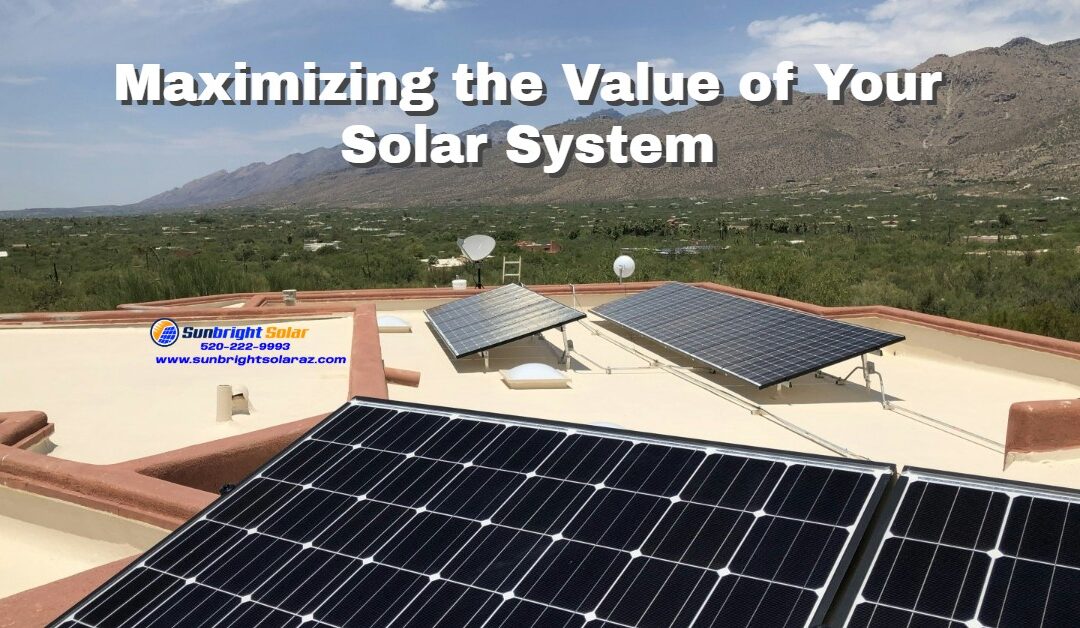
Congratulations on deciding to purchase a solar system. It is a great long-term investment for your home, and with the right habits, you can maximize both the financial return and the daily benefits of your home power plant.
How Solar Power Works
A solar system begins producing power once the morning sunlight is strong enough. Production gradually increases through the morning, usually peaks around midday, and then tapers off into the evening.
Solar panels produce direct current, or DC power, which travels from the roof to the inverter. The inverter has three important jobs:
- Convert DC power into usable alternating current, or AC power, for the home.
- Manage the solar panel output so the system can harvest as much available energy as possible.
- Provide data that shows solar production, home consumption, and interaction with the utility grid.
Where the Power Goes
Once solar power is produced on site, it generally does one of two things:
- It is consumed immediately by the home.If an appliance is running while solar power is being produced, that appliance can use the solar energy directly. If the home has battery storage, some of that power can also be stored and used later.
- It is exported to the utility.If the home’s demand is already met and the batteries are full, the extra power is exported to the utility in exchange for an excess-generation credit, often called an export rate.
The key point is that power used inside the home is usually worth more than power exported to the utility. When solar power offsets electricity you would otherwise buy from the utility, it saves you at the retail rate. Exported power is typically credited at a lower rate.
Understanding Utility Rates
Utilities generally do not credit excess solar generation at the same rate they charge for delivered electricity. Many utility plans are tiered, seasonal, or based on time of use, meaning the cost of electricity changes depending on how much you use, the season, and the time of day.
For customers on time-of-use plans, the most important strategy is to reduce grid usage during expensive peak periods and shift flexible energy use into the solar production window.
Tucson Electric Power Example
With Tucson Electric Power, the highest summer rates are typically Monday through Friday from 3:00 p.m. to 7:00 p.m. These are “on-peak” hours. Off-peak hours include weekends, major holidays, and times outside the 3:00 p.m. to 7:00 p.m. window.
Although off-peak electricity is cheaper than on-peak electricity, it is still usually more expensive than the credit received for exported solar power. That is why increasing self-consumption is so important.
Use Data to Improve Your Results
To improve your solar outcome, start by understanding when your home uses power and what can be shifted, reduced, or automated.
Before Solar: Interval Data
Before installing solar, your utility website may allow you to download interval data. This data shows your electricity use in 15-minute intervals over the course of a year. It provides a baseline for how your home has historically used power.
With advanced modeling software, historical usage can be compared with expected solar production to estimate how much energy will be used directly by the home, how much may be stored in a battery, and how much may be exported to the utility.
After Solar: Monitoring App and Utility Bill
After installation, your solar monitoring app becomes the first tool for improving performance. Most systems show panel-level production, total solar output, home consumption, and how the home interacts with the grid.
You can usually view this information in real time or historically by day, week, month, or year. The utility bill then becomes the second tool: it confirms whether the changes you make are improving your results.
Start with Small Changes
Small changes can add up, especially when they do not disrupt daily life. The goal is to increase self-consumption: using more of your solar power on site instead of exporting it at a lower value.
Improve the Home’s Thermal Envelope
An efficient home performs better than a leaky one. Start by sealing and insulating the home so the HVAC system does not have to work harder than necessary.
- Check insulation, roof coatings, and air leaks around windows, doors, vents, and pipe penetrations.
- Seal drafts with caulking, spray foam, or weatherstripping where appropriate.
- Use blackout curtains, window tint, shade structures, trellises, vines, or trees to reduce direct heat gain.
Reduce Heat and Improve Appliance Efficiency
In southern Arizona, reducing heat inside and around the home can make a noticeable difference. Incandescent and halogen lighting, leaky dryer vents, dirty coils, clogged filters, and electronics that run hot can all add load to the home.
- Replace high-heat lighting with efficient alternatives.
- Clean refrigerator coils and vents on appliances, computers, gaming systems, and other equipment that moves air or transfers heat.
- Keep HVAC filters clean and free-flowing. For energy-saving purposes, a lower MERV filtration rating may improve airflow and efficiency where appropriate.
Manage Base Loads and Phantom Loads
Base loads are devices that are always on, such as refrigerators, cable modems, fish tank filters, air purifiers, smart appliances, and other electronics that rarely shut off. Review each one and ask whether it truly needs to run 24/7 or whether it can be scheduled with a timer.
Example: Outdoor Fountain
An outdoor fountain may have a small pump and lights that run continuously or operate from dusk to dawn. If you are rarely outside after midnight, a timer can reduce unnecessary runtime without affecting your daily experience.
Example: Fish Tank
A fish tank with filters, an air stone pump, and multiple lights does not always need every component running all day. For example, the air stone and ambient LED lights may run continuously, while filters run from 8:00 a.m. to 5:00 p.m. and additional lights run from 9:00 a.m. to 3:00 p.m. and again from 7:00 p.m. to midnight.
This schedule moves the larger power consumers into the solar production window and keeps lighting outside the most expensive peak hours.
Use Smart Thermostats Strategically
Air conditioning is one of the largest electricity users in the home. Many people assume the only way to save is to raise the thermostat, but a smarter strategy is to shift cooling into the solar production window and reduce runtime during peak-rate hours.
Smart thermostats can help by offering automated scheduling, geofencing, occupancy sensing, energy insights, and weather-aware adjustments.
Pre-Cooling Example
Assume the thermostat is normally set to 77 degrees during the summer. Peak pricing runs from 3:00 p.m. to 7:00 p.m., while most solar production occurs between about 9:00 a.m. and 3:00 p.m. In southern Arizona, strong production may extend an hour or two beyond that window.
To reduce peak-hour AC usage, begin pre-cooling before on-peak rates start. For example:
- At about 2:30 p.m., lower the thermostat from 77 degrees to 74 degrees.
- For a short interval around 2:45 p.m., lower it again to 72 degrees, then return it to 74 degrees.
- Hold 74 degrees until 4:00 p.m., then gradually step back up: 75 degrees at 4:00, 76 at 4:30, 77 at 5:00, 78 at 6:00, 79 at 6:30, and back to 77 at 7:00.
This approach shifts more cooling into the period when solar output is strongest and reduces runtime during the most expensive hours. Adjust the schedule more or less aggressively based on comfort, home performance, and utility rates.
Use Batteries as a Complement, Not a Replacement
Batteries are common in modern solar systems and are often charged by mid-afternoon, making them useful for avoiding peak power purchases. However, a battery does not replace good energy-management habits. The benefits compound when battery storage is combined with smart scheduling and improved self-consumption.
Schedule EV Charging Wisely
If you drive an electric vehicle, the best time to charge is often in the morning, about one or two hours after sunrise. By then, solar production may be high enough to meet the home’s needs and begin charging the vehicle before any battery storage is full.
If possible, lower the charging rate so that charging is spread over more of the solar window. Daily life will not always allow perfect timing, and that is okay. The main priority is to avoid charging during on-peak hours from 3:00 p.m. to 7:00 p.m. when possible.
A simple way to think about the day is this: morning shoulder excess can support EV charging, midday excess can support flexible household loads and battery charging, and afternoon excess can help carry the HVAC load.
Shift Flexible Loads to Midday
Flexible or elective power use should be scheduled during the day whenever practical, especially during strong solar production and outside on-peak hours.
- Pool and spa filtration: Run filtration during the day and avoid 3:00 p.m. to 7:00 p.m., especially the later part of that window when solar production is lower.
- Laundry, dishwashing, vacuuming, and similar tasks: Schedule these during solar production hours when possible.
- Electric water heaters: If the unit has a programmable thermostat or can be retrofitted with a smart controller, schedule heating in a way that supports solar self-consumption and avoids peak rates.
Build Better Long-Term Habits
To get the most from solar over time, choose efficient appliances, look for available rebates, develop good energy habits, and regularly review your solar monitoring app and utility bill. The best results come from steady, practical adjustments that increase self-consumption without making daily life harder.
Recent Comments