
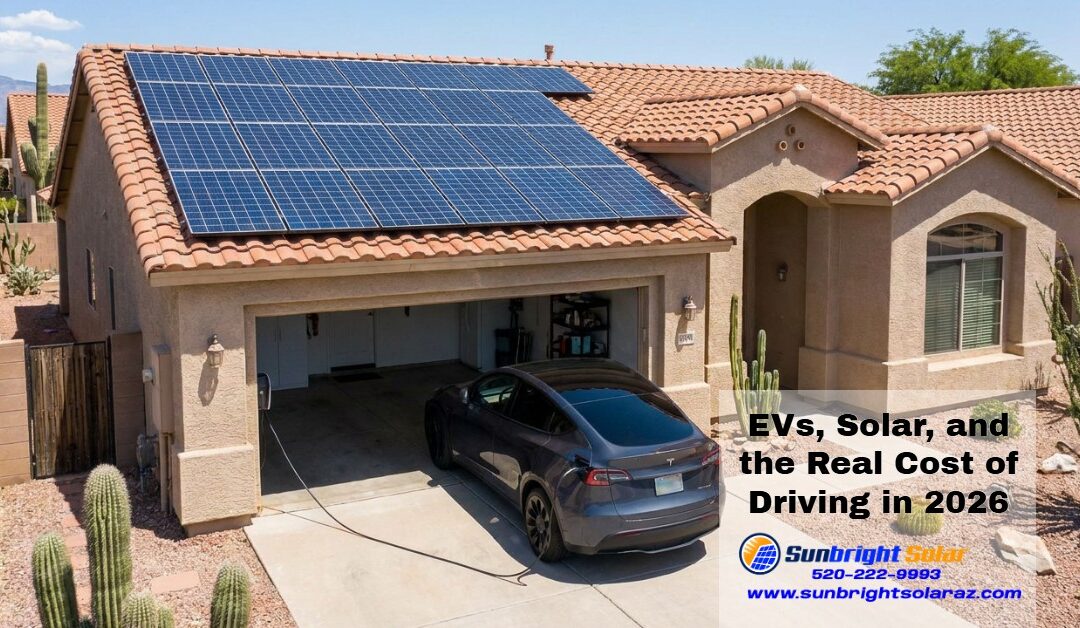
EVs, Solar, and the Real Cost of Driving in 2026
EVs, Solar, and the Real Cost of Driving in 2026
Plug-in hybrids and electric vehicles are no longer niche options. In 2026, drivers can choose from a wide range of EVs across nearly every major vehicle brand, and today’s models have come a long way from the early electric cars introduced 10 to 20 years ago.
Most people already know the headline benefits: EVs produce no tailpipe emissions and are generally cheaper to drive than gas-powered vehicles. But the advantages go further. EVs have fewer moving parts, do not require oil changes, offer a quieter ride, and often feel more stable on the road thanks to their lower center of gravity. Regenerative braking also helps recover energy while slowing the vehicle and can reduce wear on brake pads.
Long-distance charging infrastructure is still developing, and charging time can matter on road trips. For daily driving, though, the convenience of charging at home is a major advantage. Instead of stopping at a gas station, many EV owners simply plug in overnight and start the next day with the range they need.
The biggest financial difference, however, is the cost of getting from point A to point B.
Gas vs. EV: What Does a Daily Drive Really Cost?
According to the U.S. Department of Transportation, the average American driver travels about 13,476 miles per year, or roughly 37 miles per day. For a simple comparison, let’s use a gas vehicle that averages 20 miles per gallon and gasoline priced at $4 per gallon.
At 37 miles per day, that gas vehicle would use about 1.85 gallons of fuel. At $4 per gallon, the daily driving cost is approximately $7.40, or about 20 cents per mile.
Over 13,476 miles per year, that comes to about $2,695 in annual fuel costs.
Now Compare That With an EV
EVs use electricity, measured in kilowatt-hours, or kWh. Efficiency varies by vehicle, driving style, weather, and terrain, but a practical working estimate is about 3 miles per kWh.
Utility rates also vary by region and plan. For this example, we’ll use 20 cents per kWh, which keeps the math simple and reflects the higher end of many residential electricity rates.
That same 37-mile daily drive would use about 12.33 kWh of electricity. At 20 cents per kWh, the cost is approximately $2.46 per day.
Over 13,476 miles per year, the electricity cost would be about $898.40. That is roughly 66% less than the gas example before even considering lower maintenance costs.
Where Solar Changes the Equation
Solar is green, efficient, and reliable, and it can generate the electricity your home and vehicle use every day. It is not “free” electricity because the equipment and installation still need to be paid for, but the long-term cost per kWh can be much lower than utility power.
To estimate the cost of solar energy, you can take the system’s annual production, multiply it over its useful life, and account for normal panel degradation. For example, a solar system that produces 20,000 kWh per year may generate around 480,000 kWh over 25 years after accounting for degradation.
If that system costs roughly $20,000 to $25,000 through Sunbright Solar, the lifetime energy cost works out to about 4.16 to 5.2 cents per kWh.
Compared with utility power at 20 cents per kWh, that is roughly a 75% discount.
Using solar energy, that same 37-mile daily drive could cost only about 50 to 60 cents.
Over 13,476 miles per year, driving completely on solar power would cost approximately $225.
That is the difference between about $2,695 per year for gas and about $225 per year when the EV is powered by solar.
What That Means in MPG-E Terms
MPG-E, or miles per gallon equivalent, helps compare electric driving costs with gasoline in a familiar way.
With utility power at 20 cents per kWh, $4 buys about 20 kWh. At 3 miles per kWh, that provides about 60 miles of driving, or roughly 60 MPG-E from a cost perspective.
With solar power at about 5 cents per kWh, $4 buys roughly 80 kWh. At 3 miles per kWh, that equals about 240 miles of driving, or roughly 240 MPG-E from a cost perspective.
In real life, most drivers will not charge from solar 100% of the time. But the closer you get, the more powerful the economics become.
Make the Most of Solar Charging With a Smart EV Charger
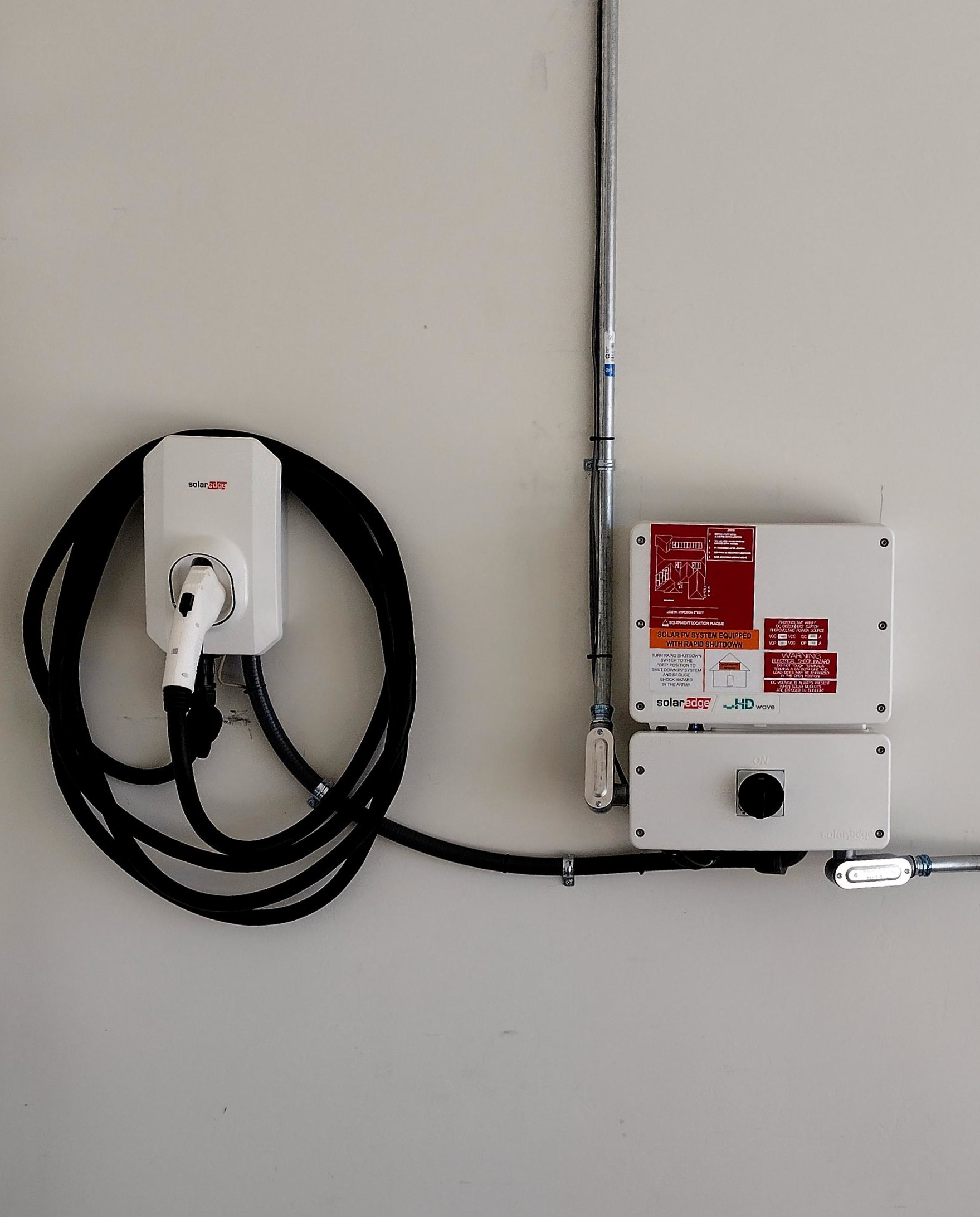
One product that can help is the SolarEdge Smart EV Charger. Its “Excess Solar” mode can direct surplus solar energy from your panels to your EV, helping you charge with more of your own renewable energy.
Solar Boost mode can combine available solar power with grid energy for faster charging, while time-of-use optimization lets you schedule charging during lower-cost hours. You can also set priorities between your home battery and EV through the mySolarEdge app.
Sunbright Solar also installs standard and custom EV circuits to support a wide range of EV chargers, power levels, and home charging needs.
The Bottom Line
EVs are already less expensive to drive than gas vehicles for many households. When you add solar, the savings can become even more dramatic. For drivers who want lower fuel costs, cleaner energy, and the convenience of home charging, pairing an EV with solar is one of the strongest long-term energy decisions available today.
Recent Comments